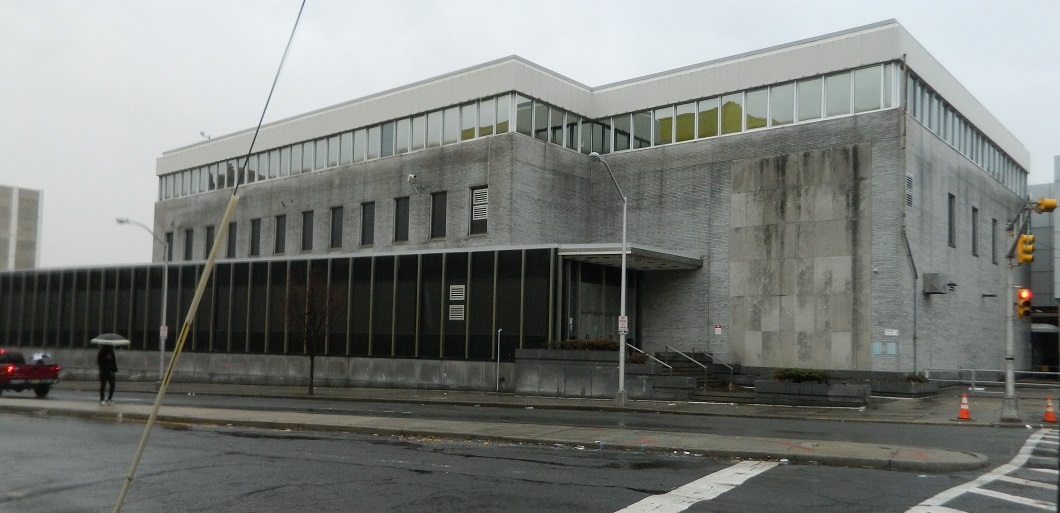
 The old Star-Ledger building, bordered by Washington and University on Court Street in Newark. I confess that I previously wondered how I might climb on a planter to pry off and keep a small metal sign that read "One Star-Ledger Plaza." I didn't do it, and now it's gone. On the night of Nov. 24, 2010, I left One Star-Ledger Plaza with a box full of keepsakes representing my 11 years and 8 months of working as a journalist from the gray, rectilinear building at Court and University streets in Newark.
I got into my car that night -- on the eve of Thanksgiving -- with a feeling of hopefulness about the future. I had taken a buyout, and I had big plans. I had no idea then that my plans would mesh with enough years of freelance work that I would have a Star-Ledger byline -- in print -- to mark the 20th anniversary of my March 22, 1999 start date.
That byline appeared with the bittersweet knowledge that my work with New Jersey's largest newpaper would come to an end in a few week's time. I was informed in January that the home renovation column that I had written on a mostly weekly basis for about 8 years would be eliminated with the latest round of budget cuts.
I left the paper in 2010 with the title of "lifestyle editor," which meant I was responsible for selecting the paper's home, garden and food content. At a time when many of the paper's editors didn't write articles, I chose to be a "contributing editor" in the active sense of being an on-staff section editor who also kept sources, did interviews and attended trade shows on my own time to write stories and keep on top of news and trends. It is work I still enjoy and seem somehow suited for.
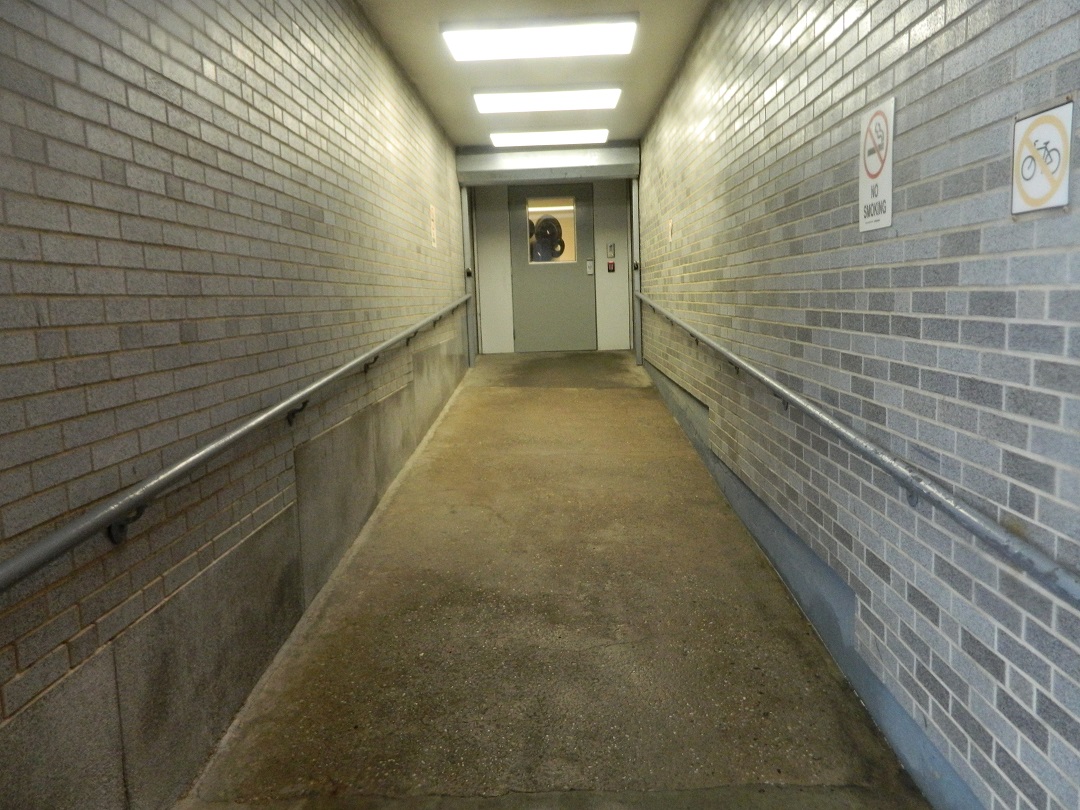 The walk to door of the old Star-Ledger building in March 2019. That work continues with At Home New Jersey, and I am so pleased to have cultivated a loyal readership over the years since the first issue appeared in March 2012. At Home has been produced consistently every other month since then as my personal effort to keep local lifestyle journalism alive in print. Granted, this isn't news that on its face can change the world, and I don't aim to do so.
I do hope, however, that in some small way the selection of printed articles has helped improve life for individuals and families with its focus on nutrition, relaxing activities and attention to physical and mental health.
I remain thankful for the many good things that have come my way as a result of my time at Court and University streets in Newark. The paper sold the building, and the staff moved to new buildings in September 2014.
I have checked in periodically to see what the old building was to become. I remember a few years back seeing a yellow construction permit adhered near the door I had entered for so many years to climb the stairs to the second-floor newsroom. The permit didn't give much of a clue about what was to come.
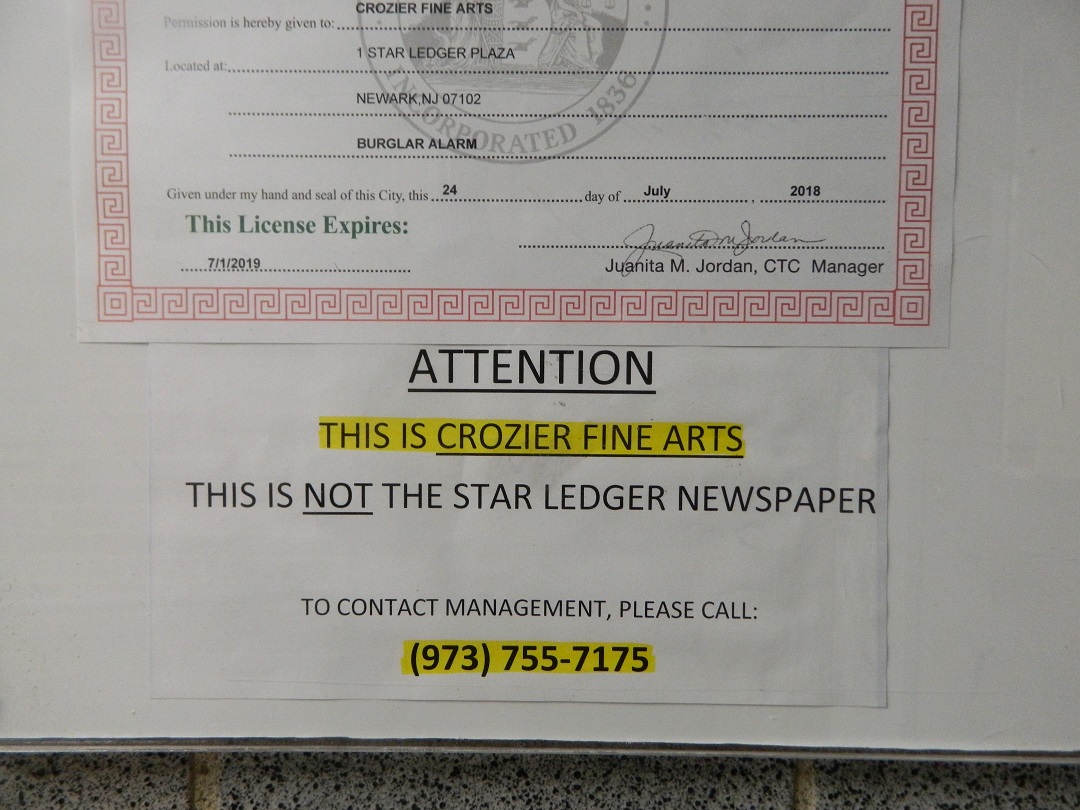 When I returned during my anniversary week in March, it was to a building with a completely transformed interior. Outside the entry door was an emphatic sign: "This is not the Star-Ledger newspaper."
Apparently, I still have a face that is honest enough to open doors, and so the young woman at the desk of what is now the chic, white-washed lobby of the arts organization Crozier, buzzed me into the access-controlled area. She sat where Fran the receptionist used to sit, but gone was the glass window and the booth where Fran and the rotating crew of retired Newark police officers who were our security guards used to sit.
In place of the glass case that had held the paper's awards and trophies of accomplishment there was a black and white graphic painting above a small table and two chairs. It was a vignette that could easily have been put together by the paper's former art director, Pablo Colon, who in the building's last days as the newspaper's headquarters dabbled in commercial interior design to polish up several areas.
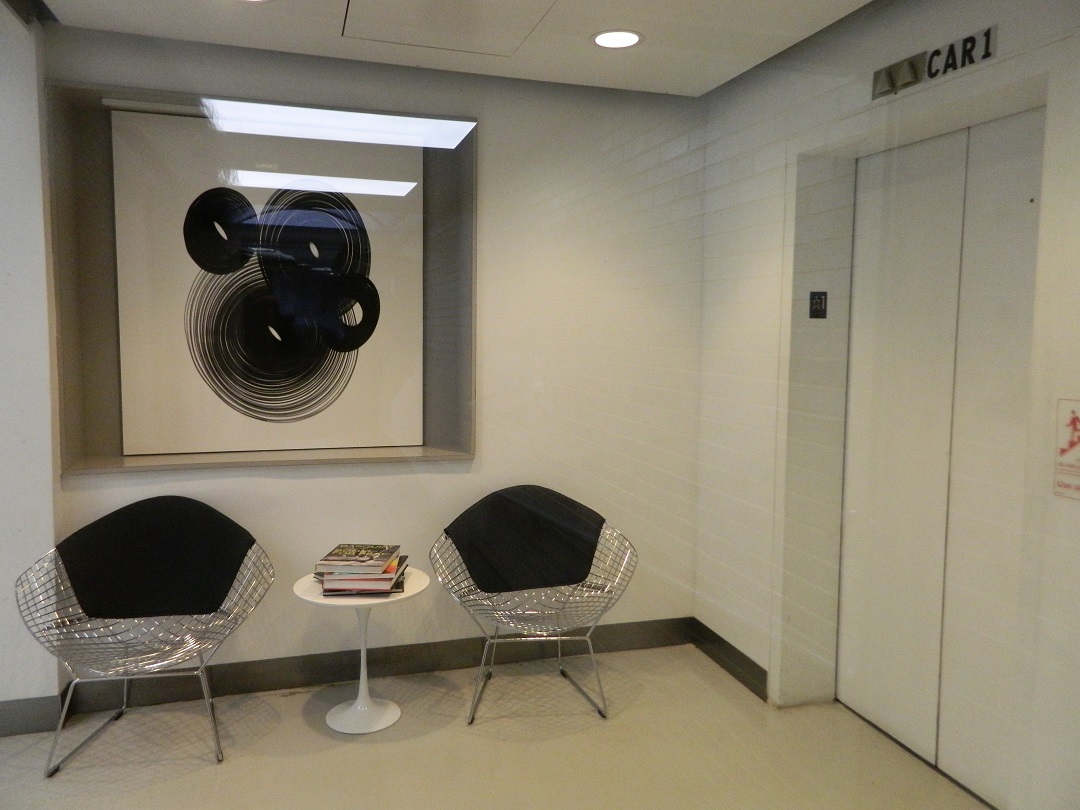 A seating area in the place where a case filled with the paper's awards once stood."I used to work here when it was the Star-Ledger," I told the young woman who granted me access to the building. I asked her about the building's present function, and she told me that Crozier is an arts organization affiliated with museums and other groups, and that the building is used mostly for storage, but people do work there. "This is not the Star-Ledger," she said, obviously not hearing my introductory statement and figuring I had not read the prominent sign to the left of the entrance.
"I know," I said. "I used to work here when it was the Star-Ledger." With that I thanked her for letting me in and turned to leave. "Are you a journalist?" she called out after me. "Yes," I said.
What it means to be a journalist has changed so much since 1999, but I still have the requisite curiosity, and so I had to find out what was going on across the street with the extensive expansion of what used to be the Star-Ledger parking garage. When I started working there, I was so happy to be able to park freely in that garage. We could even park there to take a cab -- or the bus (thanks for the money-saving tip, Fred Kaimann) -- to Newark Airport, which is just a few minutes away. (At my previous, smaller paper in Pennsylvania, we actually had to pay to park in the paper's garage, which we needed to do to work in a downtown area.)
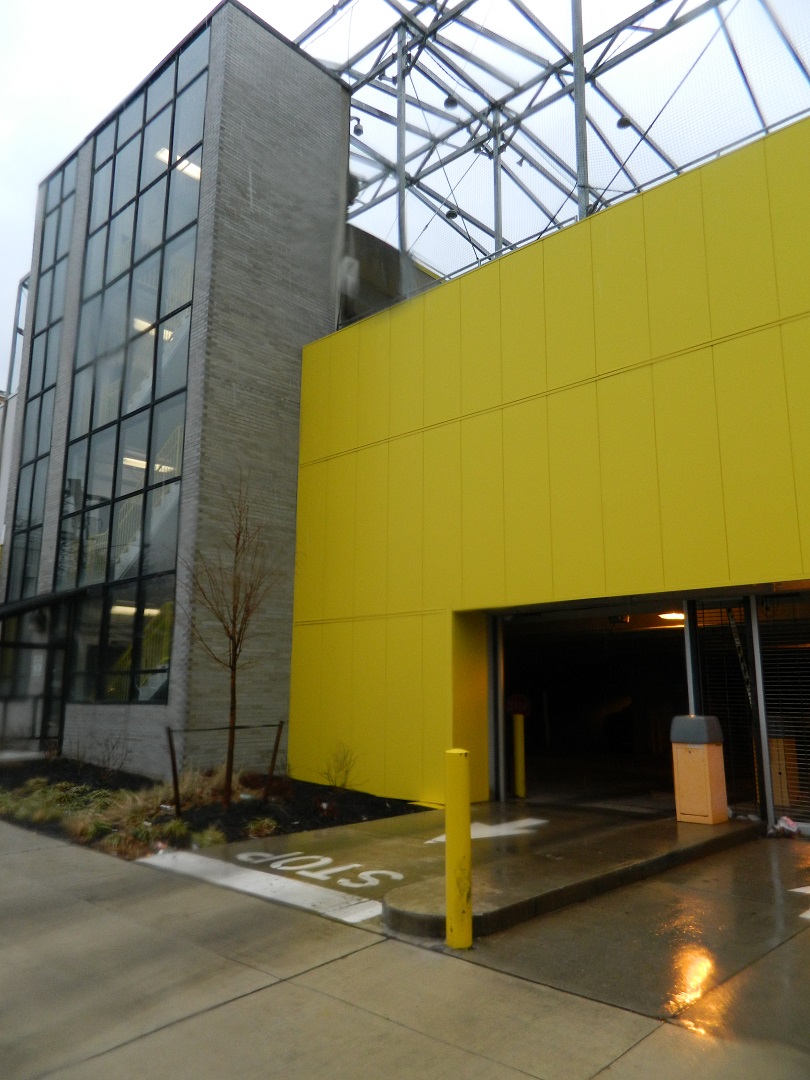 The former Star-Ledger parking garage, updated in a major way. The old Star-Ledger garage was still there, but the top level was curiously enclosed within a heavy wire cage. Next to the garage, what had been an outdoor parking area was now home to a towering yellow and white structure, which I estimated to be four stories tall. On a rainy day, I photographed the building, still unsure of its purpose.
On the Court Street side, there was a sign in one window: "High School Students Entrance." As I photographed the building, I saw nearby doors open. Youngsters who looked to be high-school age poured out. I went across the street and began to question one young man who answered me quietly and apprehensively. "Is this a high school?" It was. What high school? "North Star," he answered.
As the corner filled with a crowd of students ending their school day, I made my way through them to the building's main entrance on Washington Steet. I went to the door and rang the bell. I was looked over and granted entry. I asked the two staffers behind a glass window about the school.
Over the years in previous visits, I had watched the steel beams that support it rise. I figured it was being turned into a larger parking garage. I always meant to check into that, but with busy days, I always forgot to do so.
I learned that the school, which serves kindergarteners through 12th graders, opened in August of 2018. I asked about the parking garage. "Is it used only for parking?" I was told that in addition to parking, there is now an athletic field on the top level of the garage.
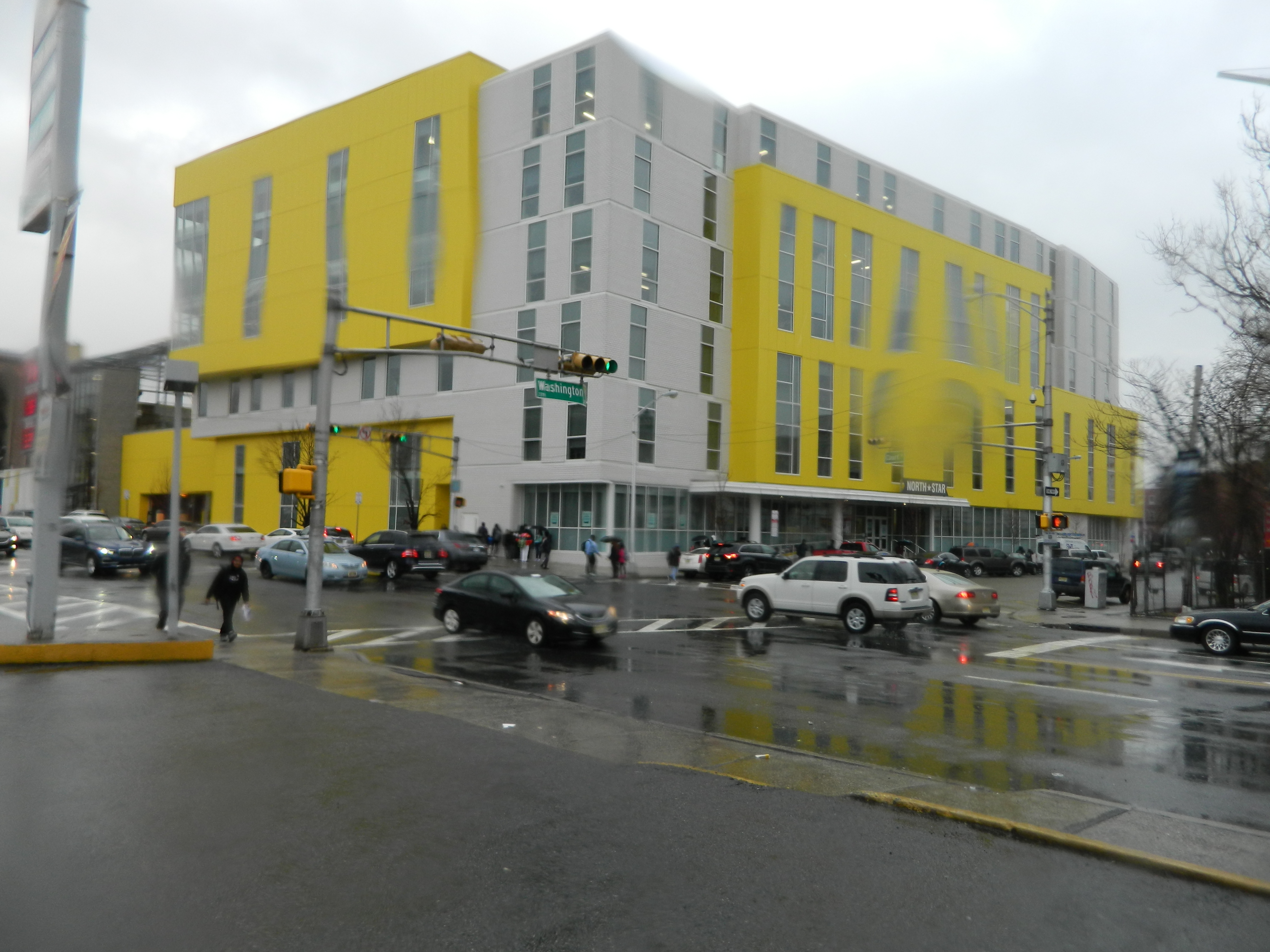 A school, North Star Academy, grew up from the open parking lot outside the garage. I visualized the stairs up, and the door leading to this deck where Star-Ledger staffers in years past had joyfully celebrated spring with the help of the Malcom X Shabazz High School band.
For years, the band would march around the block following a wheeled cart that pushed the oversized hot dog and bun that would top the Munchmobile. The procession streamed into that same garage, and on the top level met staff and the smell of smoke from grills that charred hundreds of hot dogs in honor of the Munchmobile launch.
I always seemed to be on deadline on Munchmobile Day, but I never minded putting calls on hold for the ear-splitting spectacle of a high school band marching through a working newsroom. It was one of the things that made me really love working at the paper. But things change.
"So that's why the top is closed in?" I asked the school staffers, "to keep the balls in?" That is the reason. They told me that the field is used for gym classes and for track practice, basketball, soccer and other sports.
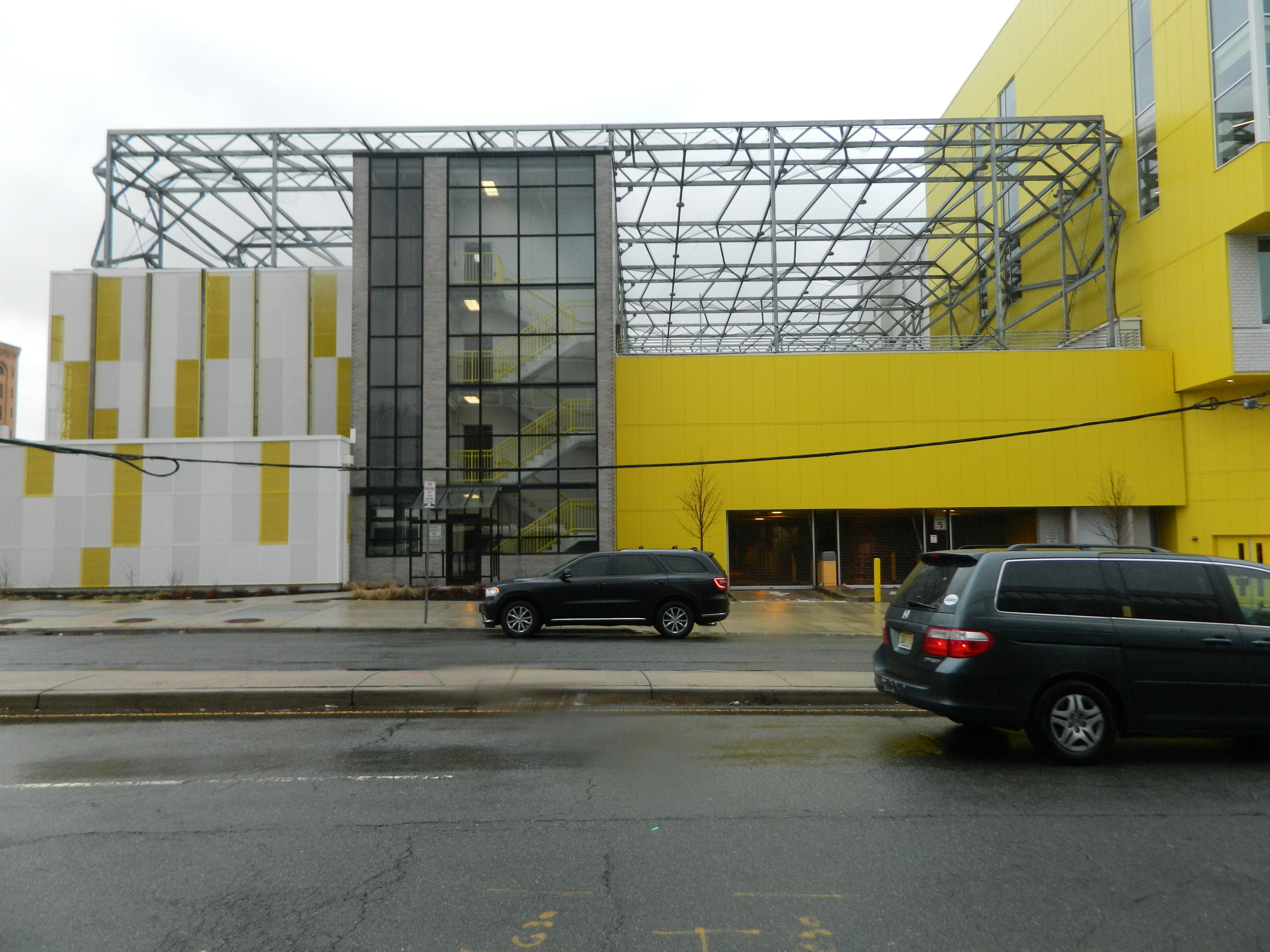 Perforated metal panels cover concrete areas of the old garage. NorthStar Academy is a part of Uncommon Schools, a network of charter schools with campuses in Newark as well as in Camden, Boston, Brooklyn, and other areas of New York. According to the Uncommon Schools website, there are 53 related schools educating 19,000 students from kindergarten through high school.
I'm happy that an open lot that once made parking spaces for journalists with a mission to keep the public informed gave way to a building that seeks to educate and prepare young people for adult life and responsibilities.
From a design standpoint, I love the way they tied the old garage to the new building. Perforated metal panels, painted yellow and white to match the building's facade were installed on the University Street side to soften the walls of the gray concrete garage. The previously black railings for the stairs leading to different levels of the garage are painted yellow, the only apparent alteration to the glass staircase enclosure that looked so otherwise unchanged that I was tempted to test my old access card. Instead, I got out of the rain and into my car to head home. But not before taking one last shot.
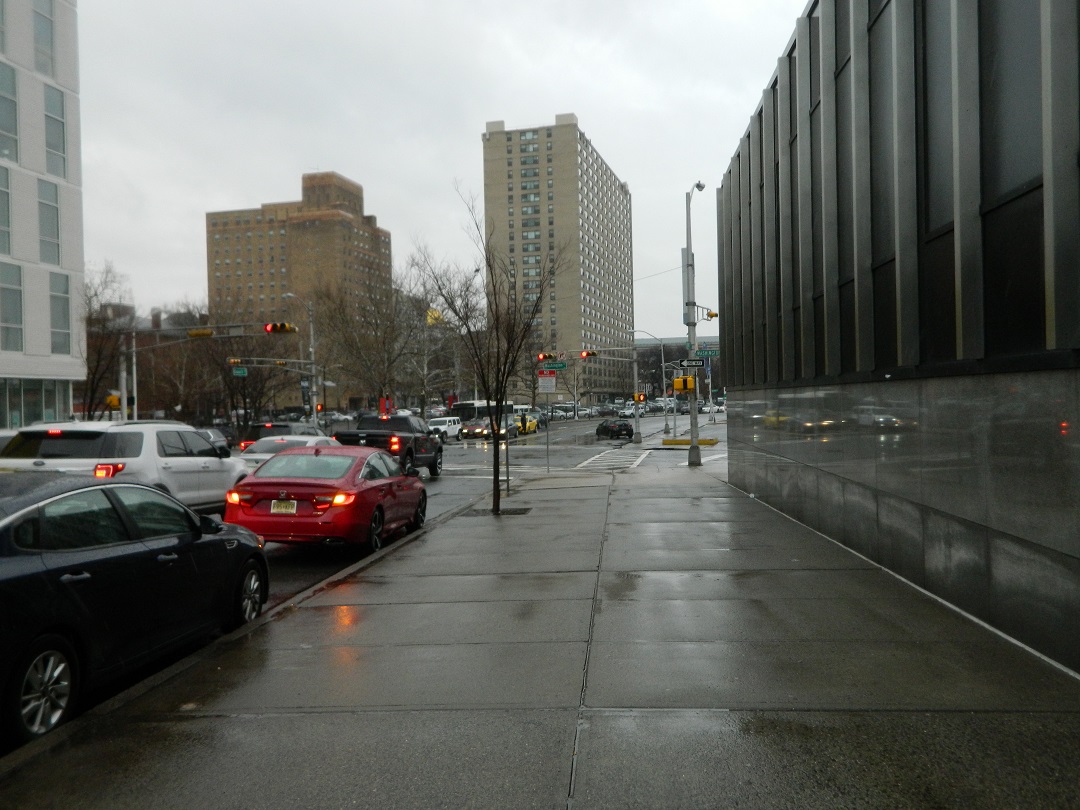 The path to the gas station, Ward's, The Ark (now Brick City Deli), Queen Pizza, banks, Newark Penn Station, Military Park and points beyond.

 Thursday, October 21, 2021 at 11:34AM
  Astrantia is a darling of English cottage gardens.
 If I'm ever able to find astrantia to plant (White Flower Farms sold out of a white variety offered online this year), there appear to be a variety of choices in both color and flower shape. The unusual, long-blooming perennial is said to attract beneficial insects to its blossoms in silver, white, maroon, rose or rosy-red. It grows up to 3 feet tall and blooms outdoors from May through July in full sun to partial shade.